
The Government calls for "A New Era of Better Buses"
Labelled a “New era of better buses” by the Government, the Bus Services Act was enacted in October 2025. With bus patronage still below pre-covid levels and bus route withdrawals being regularly announced, it is hoped that this Act can help to make buses a more popular mode of transport. Though buses remain the most popular form of public transport in the UK, they account for only 4.5% of trips, compared to 59% by car according to the National Travel Survey. As patronage decreases, bus services are reduced, with lower frequencies or complete route withdrawals, both of which lead to further decreases in patronage. To understand why this Act matters, we first need to consider the challenges facing the UK’s bus networks.

Problems Facing the UK’s Bus Networks
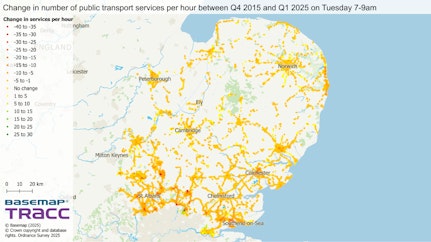
The majority of bus routes in the UK (outside London) are run by private bus operators who make the decisions on where buses go, when, and how often, based largely on economic factors. As congestion on UK roads worsens, it leads to delays and cancellations for the bus routes stuck in it. This impacts passengers as well as increasing the number of buses and bus drivers the operators need in order to run the service. Over time this leads to cuts in service and a negative perception of the reliability of buses.
These cuts tend to be focused mainly on those in rural areas, where bus patronage is lower but bus services can be even more critical. With rural residents typically living further from key services, good public transport links can be essential to connect them to education, healthcare and employment. When these services are withdrawn it forces residents to switch to private cars for these journeys, a switch which can be difficult to reverse if services are later reintroduced.

Problems Continued...
Local Transport Authorities (LTAs) previously had little control over the bus services in their area. Whilst bus routes could be subsidised, this process was typically done on an individual basis for each route, and usually once a route was at risk of withdrawal. Multiple operators in an area can also make journeys more complicated for passengers, with multiple tickets needed to get them to their destination. This lack of control and coordination limits how much LTAs can do to improve their local areas as well as worsening the passenger experience.
Whilst some areas have benefited from ZEBRA funding to fund zero emission buses and associated infrastructure, many remain stuck with little funds to put towards improving the sustainability of their fleets. With funding typically short term and sporadic, large investments can be difficult to make, slowing the progression of decarbonisation projects.

How the Bus Services Act Responds
The act introduces four main changes...
Opportunities for non-mayoral LTAs to move towards franchising and running their own buses
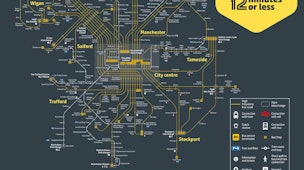
The first key element is to make it easier for LTAs to move towards franchising. Whilst the BSIPs in 2021 led to mayoral authorities such as Greater Manchester changing to a franchising model, other authorities were required to go through additional steps to receive approval. Whilst each franchising model works differently, they give LTAs control over the services in their area, allowing them to ensure that the services are well located and introducing elements such as consistent ticketing. This change is combined with a removal on the ban on local-authority owned bus companies, allowing new routes to be created which put connectivity over profit.
Designation and protection of socially-necessary routes
LTAs can now designate socially necessary routes, meaning that operators must justify cancellations or changes to services against strict requirements. This will greatly benefit those in rural and isolated communities which are typically hit hardest by these cuts. It also gives LTAs authority to obtain information about services such as the number of passenger journeys, structure of fares and the distance covered by a route. This information allows for more informed decisions about changes to buses and/or infrastructure.
Improvements to safety and inclusivity on buses
Giving LTAs the right to make byelaws regulating behaviour such as fare evasion, smoking and vaping. As well as this, bus drivers must be trained to identify, respond appropriately to and, where safe to do so, prevent anti-social behaviour and criminal offences that could cause fear to personal safety. This is in addition to disability training requirements, which includes the requirement to ensure that disabled persons and persons with reduced mobility have the same opportunities for using buses than those of other citizens. This includes the right to assistance at terminals and on vehicles. It is hoped that these changes will make all passenger journeys safer and more comfortable, improving the perception of buses as a mode.
Deadlines for zero-emission buses to be introduced
Improving the sustainability of buses through the use of zero-emission vehicles. This includes operators in England being unable to use buses registered after a date specified by the Secretary of State (and after 1 January 2030) with tailpipe emissions including carbon dioxide, carbon monoxide, hydrocarbon, nitrogen oxide or particulates. Eventually leading to the proportion of zero emission buses becoming larger over time, and reducing the amount of pollution from bus journeys.


What This Means for Local Authorities and Operators
The Bus Services Act 2025 gives LTAs noticeably greater control and information regarding the services in their areas, enabling them to make more informed impacts on the bus services in their area. This is combined with the need for operators to adapt to a higher level of oversight and changes in how bus services are run with a possible increase in the number of franchise schemes. Passengers stand to get the greatest benefit with less withdrawn services, buses run for passengers over profit and safer buses.
However, the challenges of these changes must also be noted. A key concern is the capacity constraints for LTAs, with low numbers of staff and high workloads already an issue, it will likely be difficult to make full use of these additional powers.
Conclusion
Overall the Bus Services Act 2025 appears to be a step in the right direction, though will require additional guidance for LTAs in order to fully realise its potential. We hope that this act will lead to greener, more reliable and passenger focused services throughout the UK.