
Right Vehicle, Right Route: What We Learned at ACT Expo 2026
A couple of weeks ago, Basemap headed to Las Vegas for ACT Expo 2026, one of the largest fleet technology events in North America.
The event came at an interesting time for the sector. Fleets across North America are facing a complex mix of pressures: rising fuel costs, changing policy incentives, uncertainty around federal funding, and continued pressure to reduce emissions. Despite this, the mood at ACT Expo was far from negative. The show felt busy, optimistic and commercially focused, with more than 400 exhibitors, around 200 vehicles on display and a clear emphasis on practical fleet deployment.
One of the strongest themes throughout the event was that the transition to cleaner vehicles is no longer just about ambition. It is about operational fit, cost, reliability and making sure the right technology is used in the right place.

FedEx Freight: Practical sustainability at scale
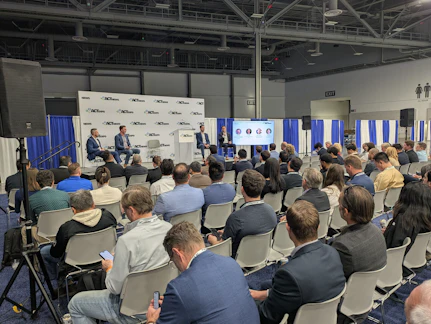
The opening keynote was delivered by John Smith, incoming President and CEO of FedEx Freight, ahead of the business becoming a standalone company.
A key message from the session was that sustainability has to work within the realities of freight operations. For local deliveries, yard operations, forklifts and terminal tractors, electric vehicles are already proving their value. These are environments where routes are more predictable, charging can be planned, and range requirements are better understood.
For longer journeys, particularly involving Class 8 tractors and heavy payloads, the picture is more complex. Public charging availability, range confidence and operational disruption remain major considerations. This is where the phrase “right vehicle, right route” really stood out.
That message strongly aligns with the thinking behind Basemap EVR. Electrification decisions should not be based on vehicle range figures alone. Fleets need to understand how vehicles will perform on specific routes, in real conditions, with factors such as gradient, weather, battery age, payload and driving patterns all taken into account.
AI, prediction and fleet efficiency
Another recurring theme was the growing role of AI and predictive analytics in fleet operations.
Several sessions explored how fleets are using AI to predict maintenance issues before they become failures. The benefit is not just fewer breakdowns, but better vehicle availability, lower disruption and more efficient maintenance planning.
There was also strong discussion around route optimisation. One comment from the mainstage captured this well: “Every optimised route pushes the dial forward.” For Basemap, this is exactly where EVR fits. Route planning is not just about finding the shortest or fastest path. For electric fleets, it is also about understanding energy use, charging needs, vehicle suitability and operational risk before a vehicle is deployed.
A mixed technology future
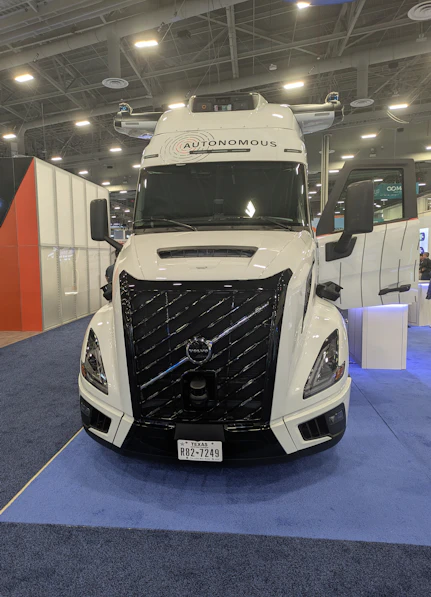
The event also made clear that the future of fleet technology will not be driven by one single solution.
Battery electric vehicles are already here and are working well in many use cases. Compressed natural gas, renewable fuels and hydrogen were also discussed as part of the future mix, particularly for longer-distance and heavier-duty operations.
The key point is that fleets need flexibility. Different vehicle types, routes and operating models will require different solutions. That makes data-led planning increasingly important. Before committing to new vehicles or infrastructure, operators need to understand which technologies work best for which parts of their network.

Market insight from the State of Sustainable Fleets report
ACT Expo also saw the release of the latest State of Sustainable Fleets Market Brief, which highlighted the changing landscape for fleet investment.
Some of the key themes included continued investment in battery electric vehicles, the growing role of AI in fleet management, and the fact that significant funding remains available through state, local and utility programmes, even as federal support becomes less certain.
The message was clear: clean fleet investment is still moving forward, but fleet operators are becoming more disciplined. Decisions increasingly need to be backed by robust evidence, strong operational modelling and a clear understanding of total cost of ownership.

Lessons from major fleet operators
Across the event, major fleet operators shared practical examples of how technology is already improving performance.
New York City’s fleet team spoke about the use of telematics across thousands of vehicles to improve insight, safety and sustainability. They also discussed measures such as intelligent speed assistance and truck side guards, reflecting the growing link between fleet technology, safety and environmental performance.
Rivian’s CEO, RJ Scaringe, also spoke about the move towards software-defined vehicles, particularly in relation to its commercial vehicle work with Amazon. The discussion highlighted how vehicle design is increasingly being shaped by software, data and connected systems, rather than hardware alone.
The breakfast sessions were also particularly useful. FedEx again returned to the idea of matching the right vehicle to the right route, while Ryder highlighted growing interest in electric vehicles from organisations with clear sustainability goals. Purolator also shared encouraging examples from its electric fleet operations in Canada, including instances where vehicles were achieving better range than expected.

What this means for Basemap EVR
For Basemap, the strongest takeaway from ACT Expo was that fleet transition is becoming much more practical and data-driven.
The question is no longer simply: “Should we switch to electric?”
It is now:
- Which vehicles should switch first?
- Which routes are suitable?
- Where is charging needed?
- How will weather, gradient, payload and battery performance affect the operation?
- How can fleets reduce risk before committing to new vehicles and infrastructure?
That is exactly the challenge Basemap EVR has been built to support. By modelling energy use across real routes and real-world conditions, EVR helps fleets understand where electric vehicles can work today, where they may need operational changes, and where other technologies may still be required.

Getting around Vegas: monorail, walking and the Vegas Loop
Away from the conference sessions, one of the more interesting transport experiences was simply getting around Las Vegas itself.
The monorail provided a useful link along the Strip and to the convention centre, with a five-day unlimited pass making it a cost-effective option during the event. However, one challenge was the distance from the monorail station to the West Hall, which was still around a 20-minute walk.
To cover that last section, we used the Vegas Loop, which transports passengers through small tunnels in Tesla vehicles. On the short conference centre route, it worked well and provided a quick connection to the West Hall. There was also visible construction underway to expand the network across Las Vegas.
That said, it also raised some interesting questions. While the system is effective on a short, controlled circuit, scaling it across a wider network could introduce new challenges, particularly around congestion, passenger capacity and accessibility. In a busy transport environment, it will be interesting to see whether the Loop can continue to operate efficiently as more destinations are added.
For a transport technology event, it was a fitting reminder that innovation is not just about the vehicle or the infrastructure in isolation. The real test is how well the whole system works for users, at scale, in everyday conditions.
Final thoughts from Las Vegas
ACT Expo 2026 highlighted a sector that is still committed to lower-emission transport, but increasingly focused on practical delivery.
Electric vehicles are already working in many fleet applications. Other technologies, including CNG, renewable fuels and hydrogen, may play a role in harder-to-electrify operations. But across every session, one theme kept coming through: fleets need better data to make better decisions.
For Basemap, that made ACT Expo a valuable event. It reinforced the importance of route-level analysis, operational modelling and evidence-led fleet planning.
The future of fleet transition will not be about choosing one technology for every journey. It will be about understanding each route, each vehicle and each operational requirement — and making the best decision for that specific use case.